
Nurses can perform a wide range of clinical and administrative tasks. Clinical tasks include administering medications and vaccinations, performing patient assessments, and providing wound care. Administrative tasks include updating patients’ records. Nursing tasks can also vary according to a nurse’s specialty area.

Nurses assess patients, make nursing diagnoses, and administer medications and treatments. What does a nurse do beyond these core responsibilities? The daily tasks of a nurse vary by specialty and work setting. For example, oncology nurses administer chemotherapy, while perioperative nurses assist surgeons in the operating room.
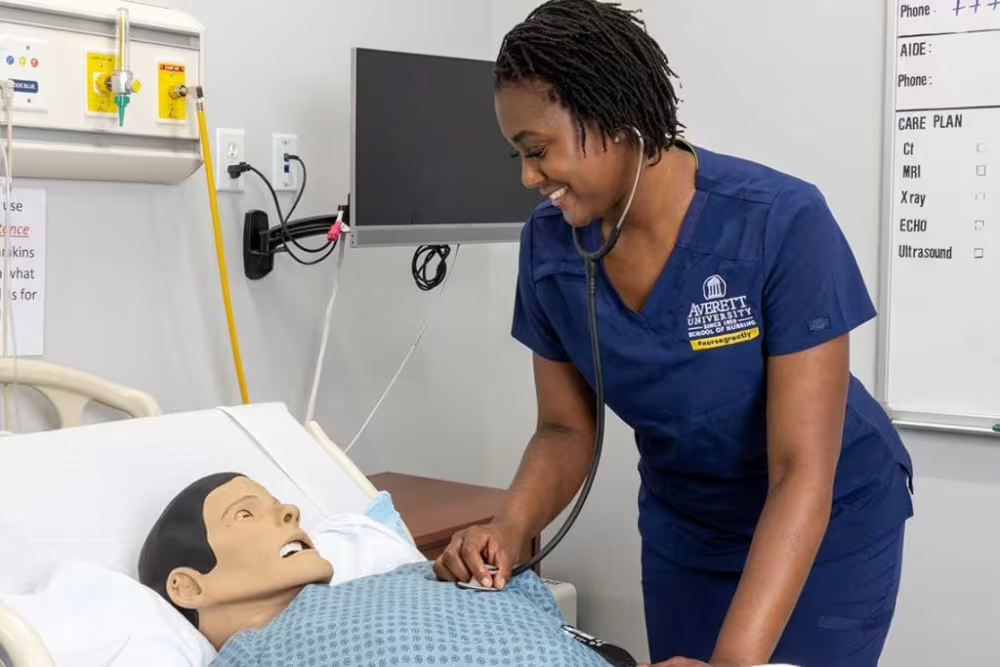
What do nurses do at the bedside and beyond? Nursing school provides firsthand experience performing nursing tasks as you work toward earning a Bachelor of Science in Nursing (BSN). At Averett University, our Accelerated BSN (ABSN) program combines hands-on learning with online didactic nursing coursework, allowing students to earn a BSN in as few as 16 months and graduate prepared to apply their nursing skills in patient care.
If you’re considering nursing, start with questions such as “What is a nurse?” and “What does a nurse do?” Explore some of the nurse tasks and duties at and away from the bedside and several nursing specialties.
What Is a Nurse?
A registered nurse (RN) promotes health, cares for patients, and protects patient safety. Nurses often serve as a primary point of contact for patients navigating the healthcare system. Their roles include patient advocate, educator, caregiver, and more.
Nurses serve in many roles across healthcare, including:
- Case managers and care coordinators
- Patient advocates
- Patient and family caregiver educators
- Patient care providers
- Researchers
Nurses take a holistic approach to patient care, considering factors that contribute to wellness and recovery, including social support, cognitive abilities, health literacy, and cultural background. Nurses work to empower patients to make informed health decisions and actively participate in their care.
Consider 7 reasons why nursing school is worth it.
What Do Nurses Do?
What do nurses do from day to day? Specific responsibilities vary by specialty. For example, a behavioral health nurse counsels patients affected by mental health disorders, while a dialysis nurse operates dialysis equipment.
In general, an RN may perform the following duties:
Patient Assessment and Monitoring
Nurses take and record patients’ vital signs, including heart rate and oxygen saturation. They evaluate the results for signs of deterioration that require intervention. Measuring vital signs may be part of a head-to-toe assessment.
Administering Medications and Other Treatments
RNs often administer medications prescribed by physicians. They start IV lines, administer fluids, manage catheters, and perform wound care. In emergencies, nurses may perform cardiopulmonary resuscitation (CPR) and other lifesaving interventions.
Patient and Family Education
Nurses help patients understand their diagnoses and treatment options. During discharge, an RN teaches patients and family caregivers how to manage care at home.
Care Coordination and Collaboration
RNs coordinate care by sharing updates with other providers and helping patients transition from the hospital to home or a rehabilitation facility. They also collaborate with other nurses, physicians, and healthcare technicians.
Patient Advocacy
Nurses advocate for their patients. By helping patients understand their diagnoses and treatment options, nurses support their right to informed consent. If a nurse identifies a potential problem, such as a newly prescribed medication that may interact with a current one, they speak up to reduce the risk of a medical error.
Additional Daily Tasks of a Nurse
What is a nurse’s role beyond direct patient care? Other responsibilities can include:
Documentation and Electronic Health Records
Nurses spend significant time charting patients’ health histories, symptoms, medications, and treatment updates. When a nurse administers a medication dose, they document it in the patient’s electronic health record (EHR).
Discharge Planning and Follow-Up Care
When patients are ready to leave the hospital, nurses contribute to planning their discharge. They may arrange a transition to a long-term care facility or teach patients how to manage their health at home. Patients may also need follow-up care, including physical therapy and physician visits.
Professional Development
Nurses are lifelong learners. They must complete continuing education (CE) courses and stay current with nursing research to help them apply evidence-based practices. Participating in CE courses is also a requirement to maintain RN licensure.
Nurse Tasks and Duties Away From the Bedside
Some nurses move away from direct patient care to become nurse administrators or managers. Others pursue nursing research. Some common tasks for these nurses include:
Nurse Leadership and Administration
Nurse managers and administrators typically focus on leadership and operational responsibilities rather than direct patient care. Their tasks may include:
- Compliance fulfillment
- Department budgeting
- Department policies and procedures
- New hire onboarding and training
- Resource allocation
- Shift scheduling
- Staff development
Nursing Research and Evidence-Based Practice
Some nurses become researchers who help expand the profession’s body of knowledge. Clinical research nurses support the development of new treatments and medical devices that may help patients recover or manage chronic conditions. Their responsibilities may include:
- Compile study results and publish findings in medical journals
- Instruct patients and ensure they adhere to study protocols
- Interview patients before research studies and monitor and record their progress during the study
- Present research findings at medical conferences
There are many alternative nursing careers away from the bedside to consider pursuing.

The Role of Different Nurses in Healthcare
What does a nurse do in different specialties? In addition to performing core nursing duties, nurses can develop specialized skills that align with their chosen specialty.
A nursing specialty may focus on a specific patient population, such as women’s health, pediatrics, or adult-gerontology. Others focus on an area of medicine, such as oncology; a body system, such as cardiac care or orthopedics; or a setting, such as home health.
Some additional examples include:
- Emergency room/urgent care nursing
- Hospice nursing
- Neonatal intensive care nursing
- Perioperative nursing
- Psychiatric mental health nursing
- Public health nursing
- Trauma center nursing
Nurses across specialties often perform similar tasks. For example, an emergency nurse and a medical-surgical nurse both start IV lines. Other duties vary by specialty. For example, a hospice nurse focuses on pain management and emotional support, while a cardiac rehabilitation nurse develops individualized exercise recommendations and teaches patients about healthy lifestyle choices.
Where Do Nurses Work?
Many nurses work in hospitals, including teaching and Magnet hospitals. Others work in physicians’ offices, such as family practices or specialty clinics, or in outpatient surgery centers.
Other workplace options for an RN include:
- Behavioral health treatment facilities
- Birthing centers
- Correctional facilities
- Dermatology practices
- Emergency medical evacuation flights
- Government agencies
- Insurance companies
- Nursing homes and assisted living facilities
- Pharmaceutical companies
- Remotely via telehealth
- Schools
These options allow nurses to pursue settings that align with their preferences. Those drawn to a fast-paced environment might work in an emergency room or trauma center. Those who prefer a predictable daytime schedule might work in a school, insurance company, or public health agency.

Start Your Nursing Career at Averett University
Wherever your nursing career leads, you can build a strong academic foundation at Averett University. Our rigorous nursing education prepares graduates for a range of nursing specialties. Small class sizes and Academic Success Coaches provide personalized support.
If you have a non-nursing bachelor’s degree or at least 60 non-nursing college credits, you may qualify to apply for admission to our ABSN program. Request info today and connect with an admissions advisor to get started.