
There are many reasons to become a nurse, including good pay, diverse specialty options, and career growth opportunities. Effective nurses are compassionate team players who communicate clearly and stay calm under pressure. To get started, you’ll need a nursing degree and RN license.
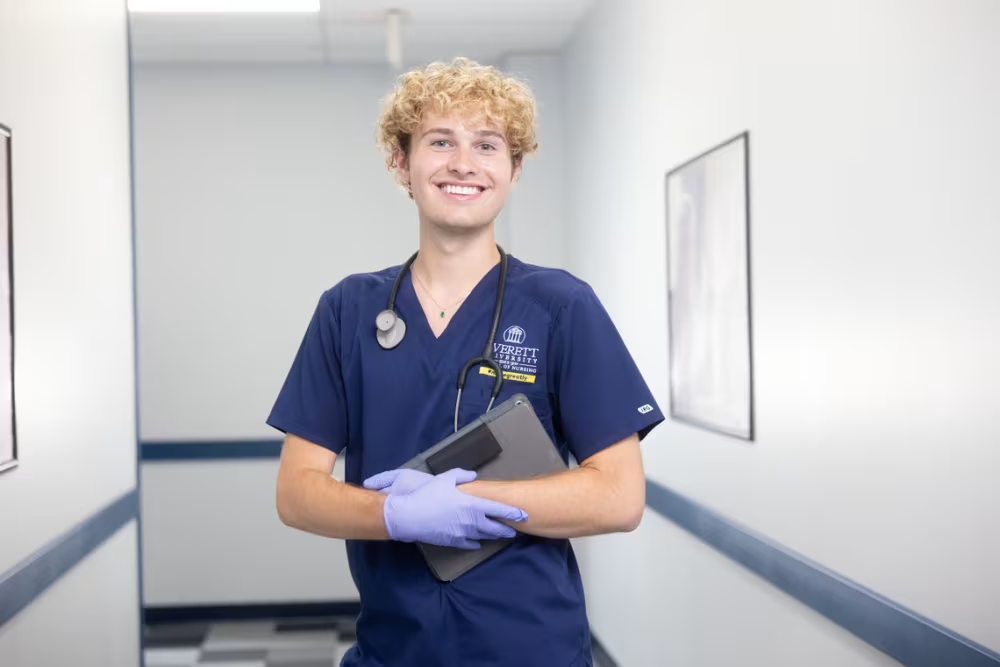
Not everyone sticks with their first career field for their entire working lives. Career changes are common, and if you're looking for new challenges to tackle, you might wonder, “Should I become a nurse instead?”
There are many factors to consider before making your decision. If you decide to move forward with a career switch to nursing, Averett University’s Accelerated Bachelor of Science in Nursing (ABSN) program can help. Our Accelerated BSN program, designed specifically for career switchers and transfer students, offers a fast track to nursing. You can leverage your prior non-nursing education and earn a BSN in as few as 16 months.
Before reaching out to an admissions advisor at Averett, you’ll need to be able to definitively answer the question, “Do I want to be a nurse?” You should be able to articulate the reasons why you want to pursue this career, know the important skills that will help you succeed, and understand what to expect from daily life as a registered nurse (RN).
Why Become a Nurse? Key Reasons People Choose the Profession
Nurses are needed in a variety of settings, including hospitals, schools, disaster sites, cruise ships, and beyond. You can also choose from dozens of different nursing specialties, such as pediatrics, bariatrics, hospice, home health, and community health. Wherever your passion lies, you’re likely to find a specialty that aligns with it.
Nursing is also a good career for people who enjoy learning new things, working with new people, and tackling new challenges with each shift.
Why become a nurse? Consider the practical benefits. Nurses are well-compensated for their hard work. According to the U.S. Bureau of Labor Statistics (BLS), the median annual salary for an RN was $93,600 as of May 2024. Plus, nurses have a robust job growth rate. The BLS predicts it will be 5% from 2024 through 2034, faster than average.
Another reason to choose nursing is that you’ll have plenty of room for growth. Nurses can pursue career advancement in clinical or non-clinical roles. Graduate-level education and professional certification can also open many doors.
Do I Want to Be a Nurse? Questions to Ask Yourself
It’s not always easy to make a decision, despite the many compelling benefits of a nursing career. Take some time to reflect on the following questions:
- What do I value most in a career?
- Am I genuinely interested in health science?
- Do I love to learn and am interested in a career that requires lifelong learning?
- Do I enjoy working with other people?
- Am I empathetic and good at consoling others?
- Do I know what kind of nurse I want to be? How do I envision myself helping others?
If you know any nurses or other medical providers on a personal level, consider asking them for their insights. You might also consider applying to a volunteer position at your local hospital.
Traits and Skills That Help You Succeed in Nursing
Another way to guide your decision-making is to consider the personal characteristics and skills that are essential for nurses. These include:
- Adaptability and resourcefulness
- Communication skills
- Critical thinking and analytical reasoning
- Decision-making skills
- Empathy and compassion
- Inquisitiveness
- Professionalism and a firm commitment to ethics

Explore some of the top soft skills needed in nursing.
Depending on the specialty, nurses will exercise certain skills more often than others. For example, a critical care, emergency room, or trauma nurse will use triaging skills more often than a hospice nurse; however, all nurses need a diverse skill set to be prepared.
What the Day-to-Day Reality of Nursing Looks Like
Your day-to-day routine as a nurse will depend heavily on your chosen nursing specialty and work setting.
For instance, if you're a medical-surgical nurse in a hospital, you'll likely juggle many patients recovering from illness, injury, or surgery. You'll update their charts, administer medications, provide wound care, deliver patient and family caregiver education, and collaborate with other providers.
If you’re a home health nurse, you’ll probably check in with your agency at the start of each shift and ensure you have all the necessary supplies. You’ll drive to each patient’s home and conduct an assessment, check on their recovery progress, teach family members how to operate durable medical equipment, perform wound care, and provide medication management.
School nurses maintain students’ health records, conduct health screenings, administer medications, provide mental health support, and deliver health education. School nurses also liaise with families, and they may sometimes respond to health emergencies.
What do nurses do? Take a closer look at the roles and responsibilities.
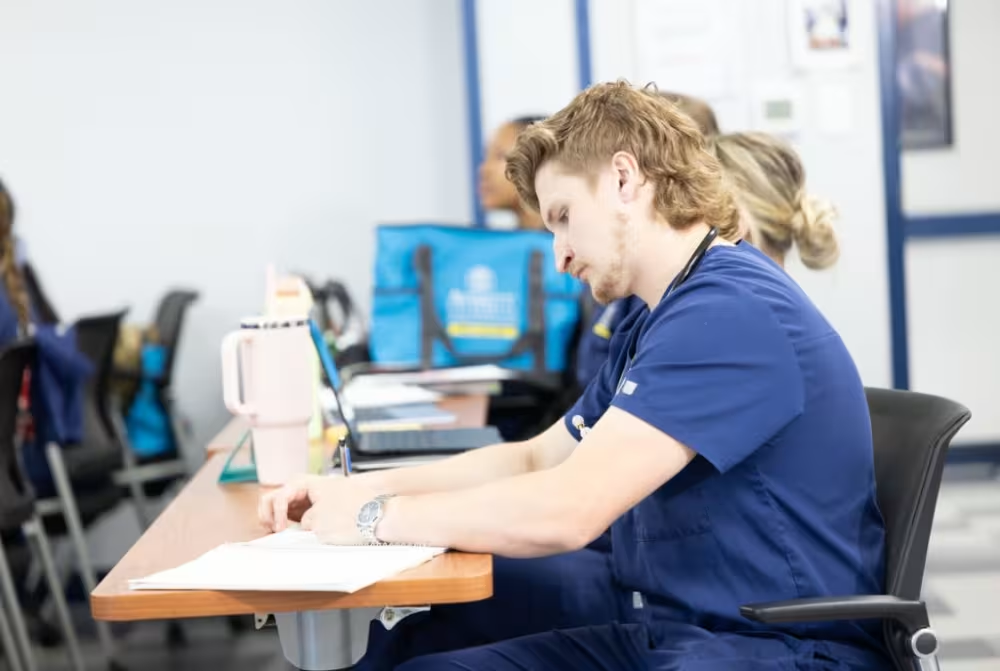
Lifestyle, Schedule, and Emotional Considerations
Although every nursing specialty is a little different, nurses often navigate busy shifts, going from one patient to the next. They must manage frequently shifting priorities and spend a lot of time on their feet. Nurses may also need to shift and transfer patients, which requires some physical strength, although many hospitals have equipment that assists with these tasks.
Many nurses work 12-hour shifts three days per week, while others work 10-hour shifts four days per week. They can also work night shifts, depending on the work setting. So, why become a nurse if you prefer a regular schedule? Standard eight-hour shifts are more common in specialties such as dermatology or primary care.
It’s also worth considering the emotional requirements of a nursing career. Emotional resilience is key, as is the ability to behave professionally and develop professional boundaries. Not all patients and families are easy to work with, and not all patients will survive. Nurses need to practice self-care to reduce the risk of burnout.
Education and Training You’ll Need to Get Started
To become a nurse, you must first earn a nursing degree, then pass the NCLEX-RN to earn a license. There are several paths to becoming an RN: you can earn an associate degree or a bachelor’s degree to qualify for the NCLEX-RN.
If you have a non-nursing bachelor’s degree or college credits, you can start your nursing journey with Averett’s ABSN program even if you don’t have any prior healthcare experience. If you meet the admissions requirements, you can earn a BSN in as few as 16 months.
Once you earn a degree, you can apply for an authorization to test (ATT) from your state board of nursing (BON) to take the NCLEX-RN. Passing this licensure exam allows you to obtain an RN license and begin working as a nurse.
After you’ve gained some clinical experience in your chosen nursing specialty, you might want to look into options for professional certifications or graduate-level nursing education. Adding more credentials to your resume may allow you to pursue career advancement.
How to Decide If Nursing Is the Right Career for You
“Do I want to be a nurse?” There’s no universal way to decide if nursing is right for you, but you might want to try the following steps:
- Assess your motivation. Why are you dissatisfied with your current career or course of study, and why does nursing appeal to you?
- Do some honest self-reflection. Evaluate your personal traits and personality. Can you handle challenges and stay calm under pressure?
- Gauge your curiosity. Look online for nursing school tutorials on topics like pharmacology and pathophysiology. Do these subjects appeal to you?

Discover how to make a career change to nurse in 6 steps.
Contact Our Admissions Team
“Should I become a nurse?” If you’ve decided the answer is yes, then it’s time to learn more about earning a degree at Averett. Here, you’ll benefit from small class sizes, personalized support, and Academic Success Coaches to help you navigate the challenges of nursing school. Plus, with no waitlist and three start dates each year, you can get started sooner.
Reach out to our admissions team today. You’ll be assigned a dedicated admissions advisor, who will support you each step of the way.